Product Type
Responsive web app
Role
UX and UI Design Lead
Context
Our clients were struggling to finding the right collaborators within the unique dynamics in the music industry. Finding the right people can be difficult—a single music video might require dozens of specialized roles, from audio engineers and videographers to lawyers, and this complexity is further amplified by endless styles and niche skills that are unique to different musical genres.
The goal of the project was to connect music industry professionals with their ideal collaborators utilizing an audio-tagging algorithm. The algorithm would be used to match audio files by similar sound qualities, and utilized in two contexts: to match users with similar sounds and to allow users to reverse audio search. This project posed a unique challenge of combining a professional networking experience akin to LinkedIn, the matching experience of a dating app, and the music sharing experience of platforms such as SoundCloud.
"This makes networking a lot more accessible. It's is game-changing for the music industry.”
- Anonymous user tester
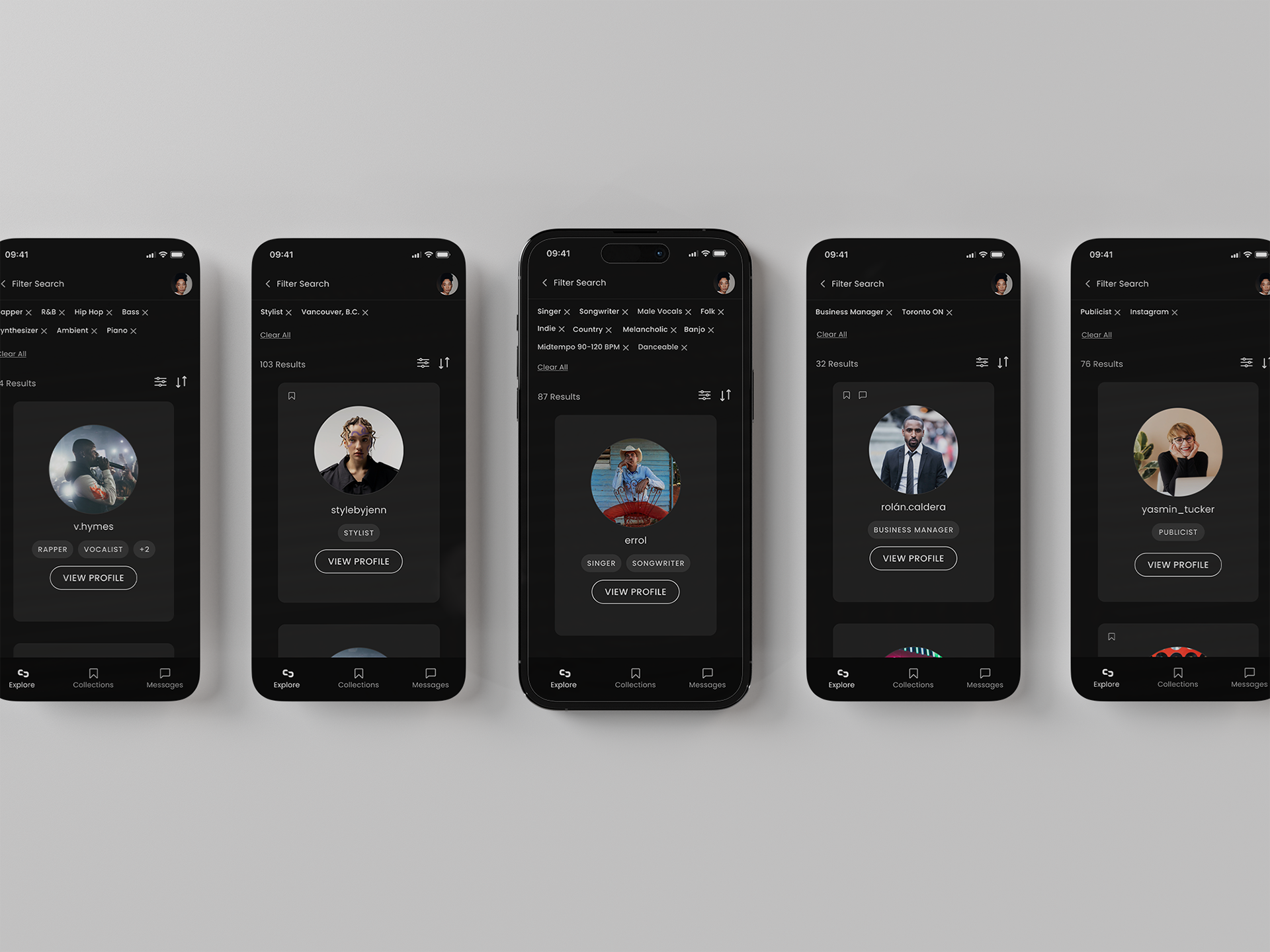
Profiles being viewed from filter search results.
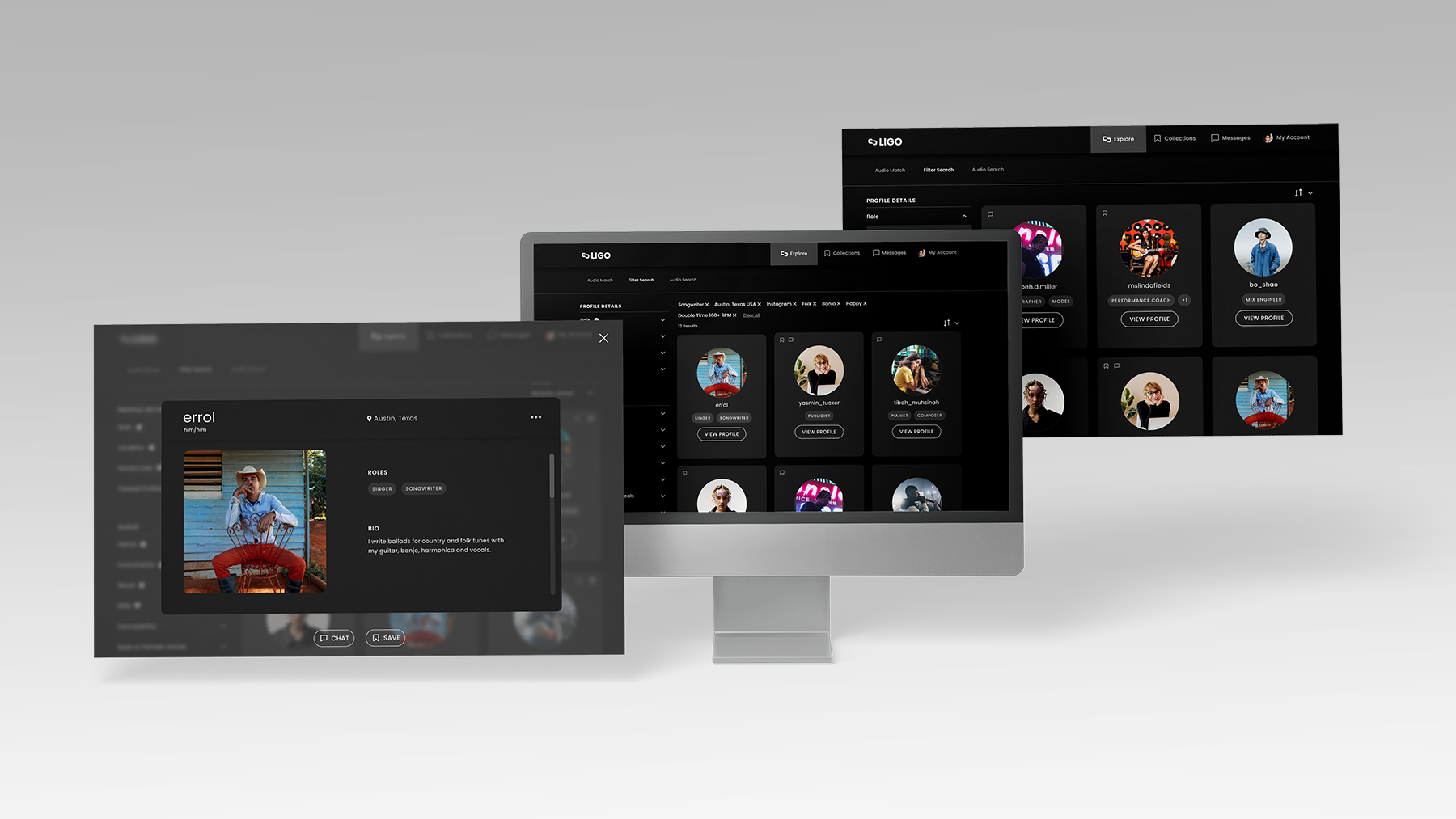
A user's profile viewed via the Explore page filter search.
Process
We conducted a broader than normal market analysis that encompassed music licensing sites, networking platforms, social media, service marketplaces, dating apps, music streaming services, and portfolio websites. User interviews revealed two primary user groups: Seekers (project leaders looking to hire) and Suppliers (freelancers looking for work/discovery) which were developed into personas to define their behaviours, pain points and needs.
To accommodate and measure user preferences for the first iteration of the product, we opted to created a responsive web app. We suspected that Ligo would have similar device usage as LinkedIn, which hovered just above 50% mobile. However, we wanted to test it's desktop utilization and collect user feedback on the overall mobile experience before building platform-specific native apps.
Some critical design strategy considerations included:
• Ensuring user profiles contained enough detail for discoverability and trust while keeping onboarding simple to minimize drop-off.
• Designing search and filter parameters to deliver meaningful results, using the Jaccard index across audio features such as BPM, genre, and instruments.
• Allowing users to customize filter searches with options for "all" or "any" matches.
"The team's dedication, skill, and customer-centric approach made the whole process enjoyable and stress-free. I am thoroughly impressed with the outcome of our project and the positive impact it has had on our business. They will undoubtedly exceed your expectations and deliver a product that aligns perfectly with your vision.
- Michael, the client
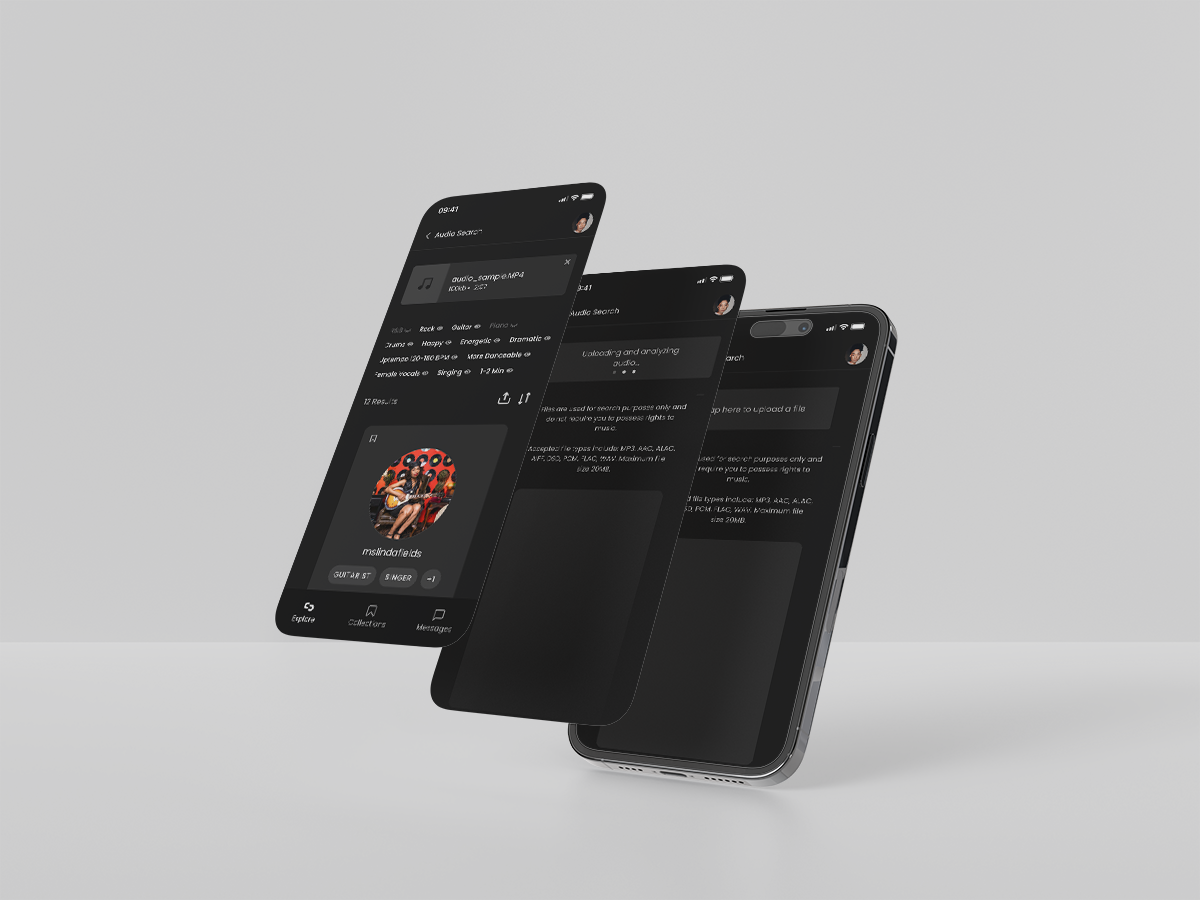
Search via uploading an audio file.
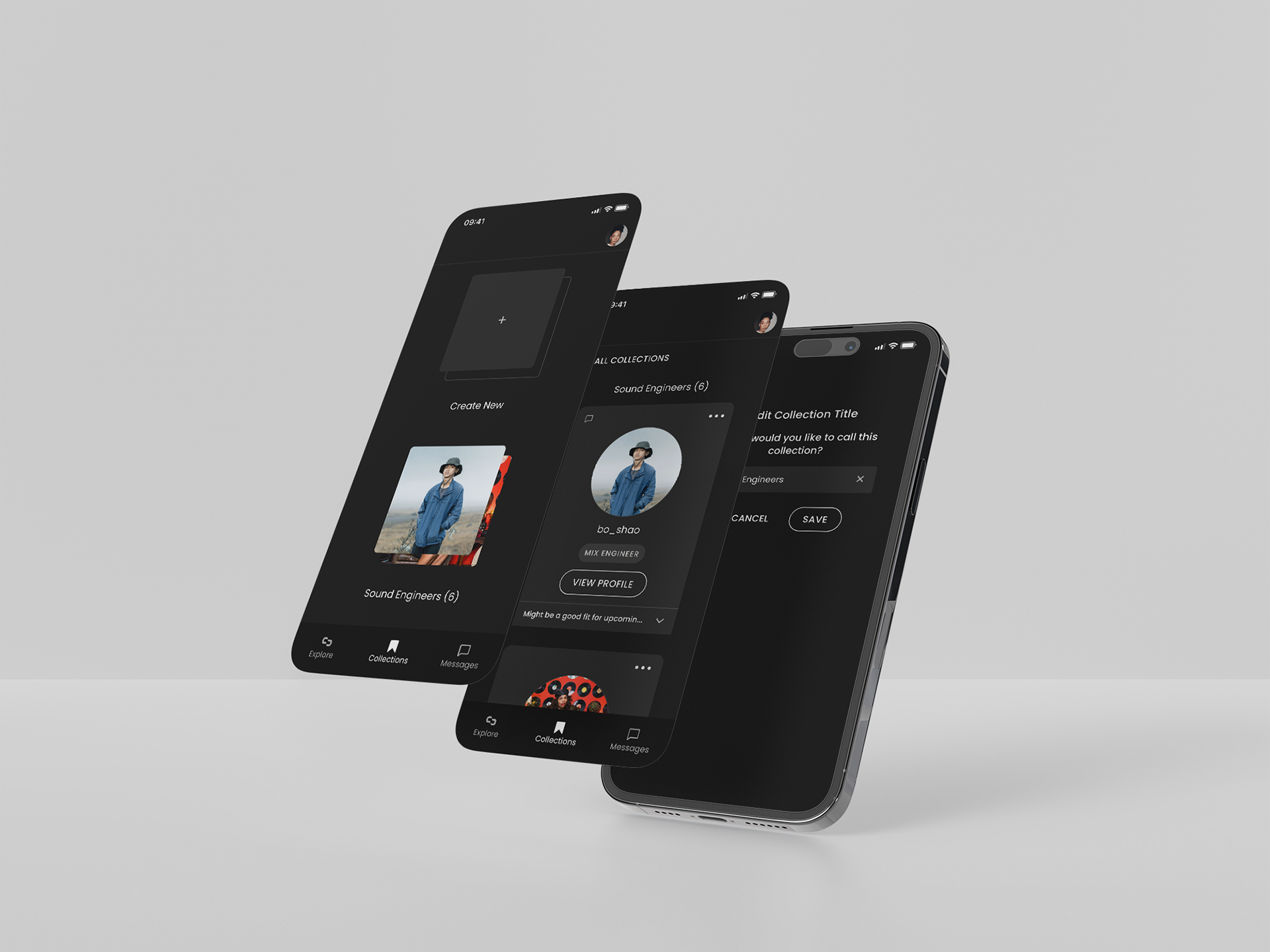
Saving a user's profile to a new Collection.
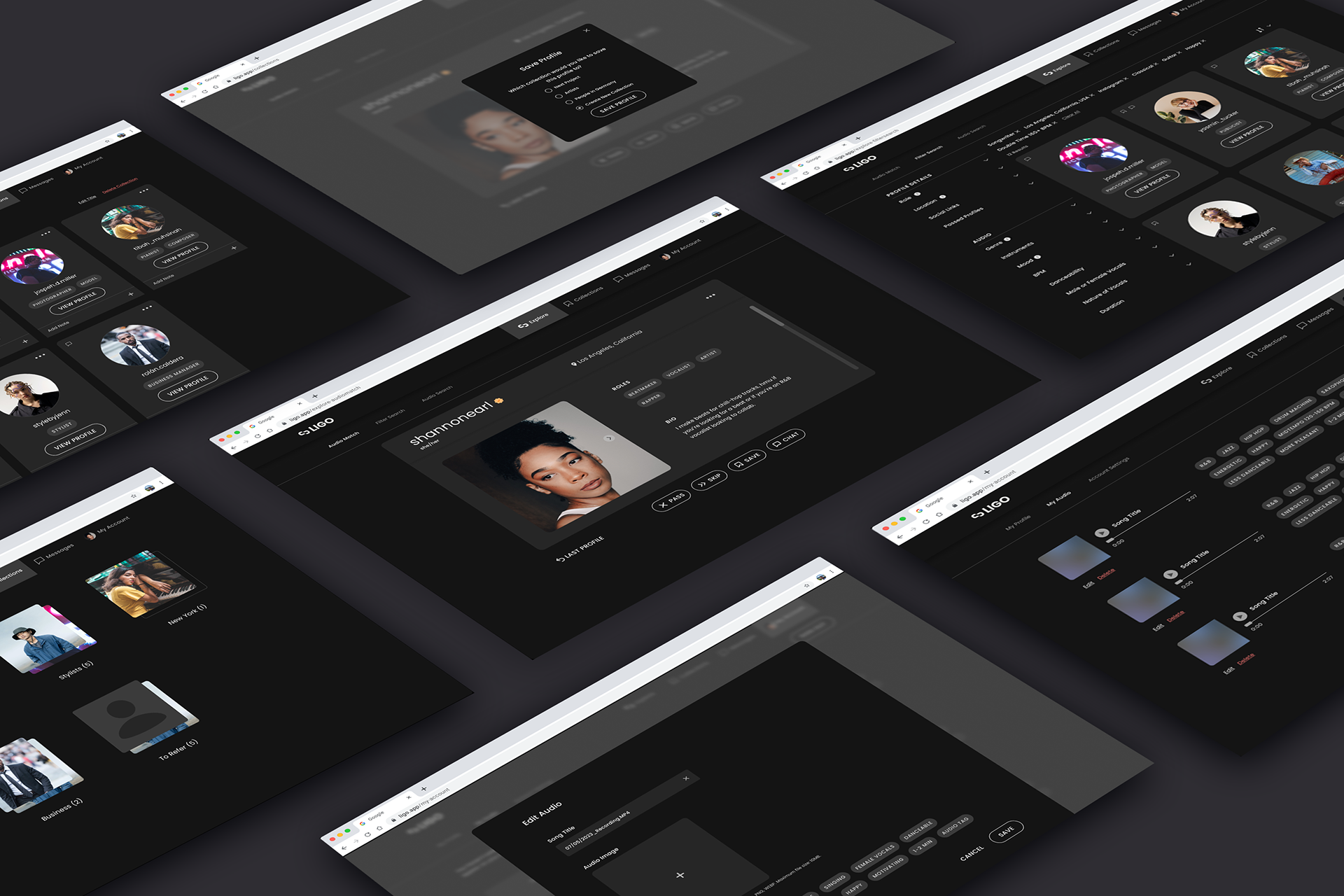
Overview of app screens on dektop.
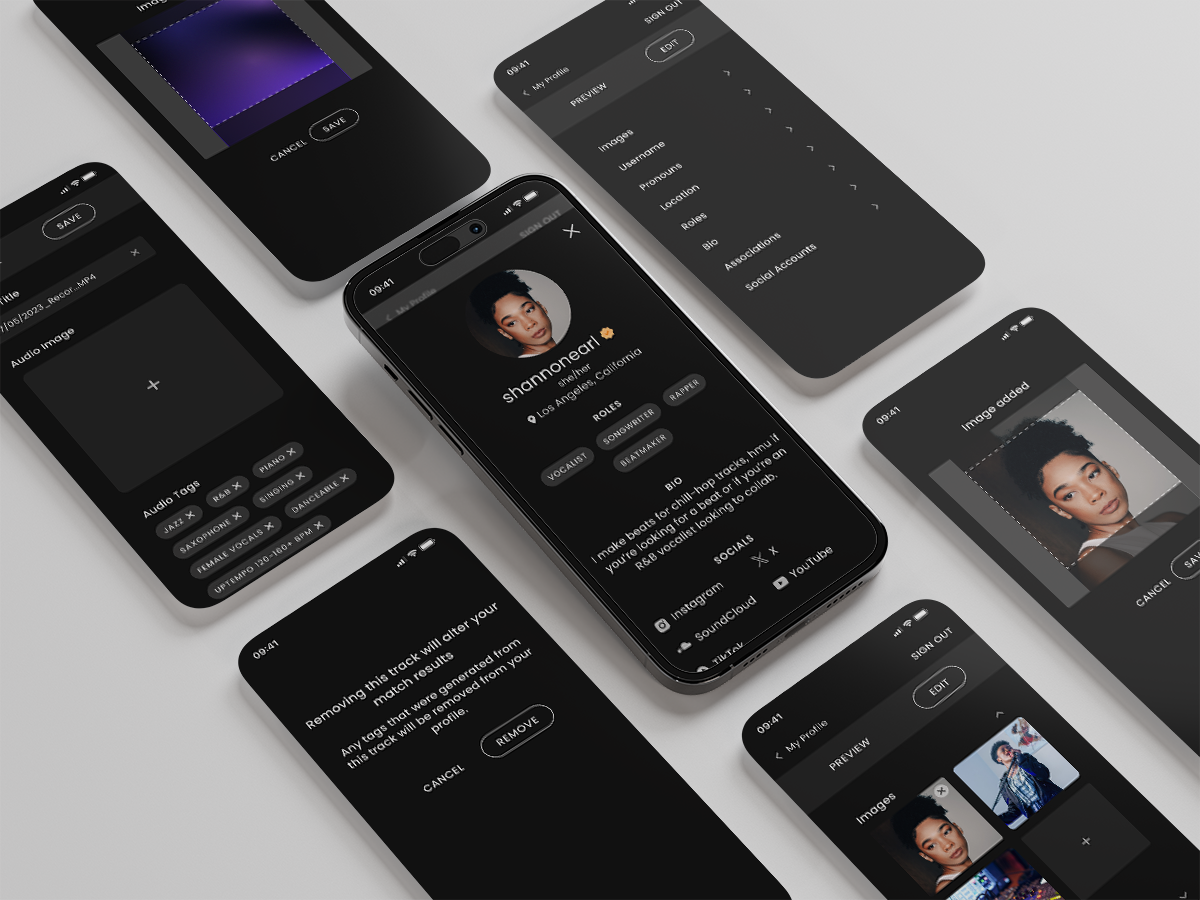
Profile building and editing screens.
Impact
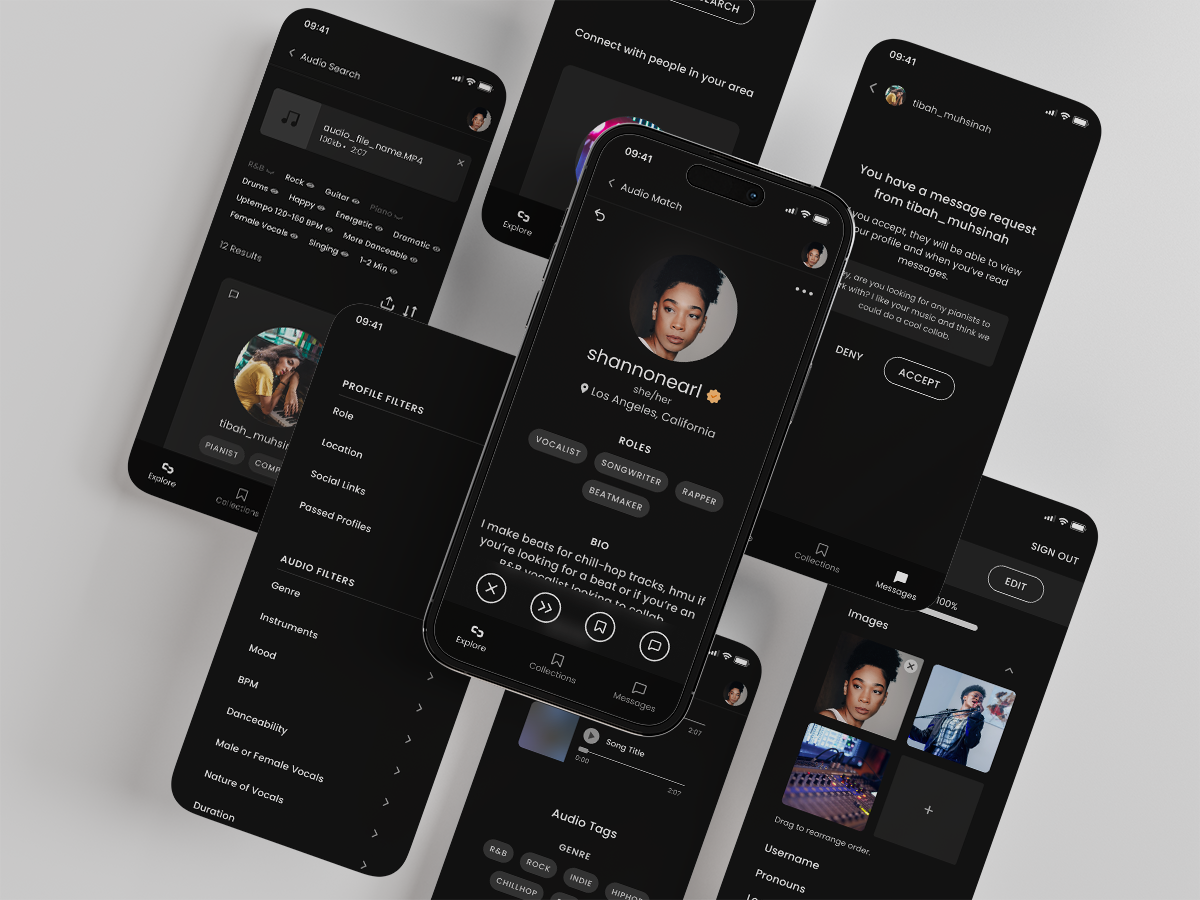
The final design uses a dark mode aesthetic that aligns with the music industry and evokes a mood similar to popular streaming platforms. Core features include:
Explore, where users can search for or match with other users
Collections, where users can bookmark and organize profiles
Messages, where users can communicate with collaborators
Profile, where users can create and manage a public-facing professional profile
The product was refined for usability and delivered to the client in January 2024.
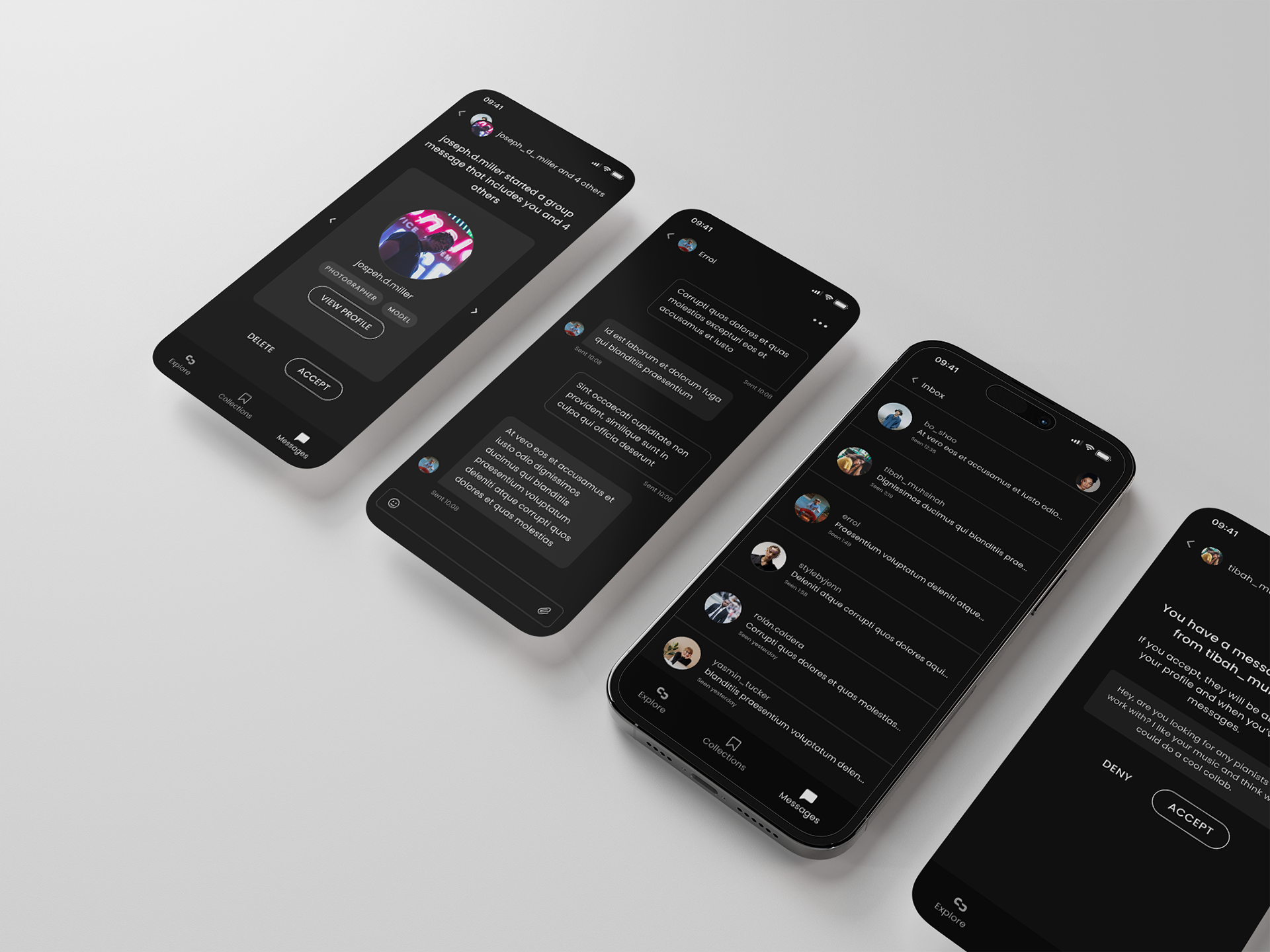
Messaging screens.